Masculine vs Feminine Energy: Why Are Modern Relationships Becoming So Complicated?
November 17, 2026Law of Attraction vs Astrology: Are You Creating Your Destiny or Following Your Birth Chart?
November 17, 2026
Three Different Paths, One Big Question
What is the truth about life?
Is it something we discover through science, something we learn through religion, or something we experience through spirituality?
Science asks us to question, investigate and seek evidence. Religion offers faith, traditions, scriptures and moral frameworks. Spirituality encourages us to explore our inner world, consciousness and connection with something greater than ourselves.
But here is an interesting question:- What if science, religion and spirituality are not necessarily enemies? What if they are exploring different dimensions of the human experience?
To understand this, we must first understand what each one actually represents.
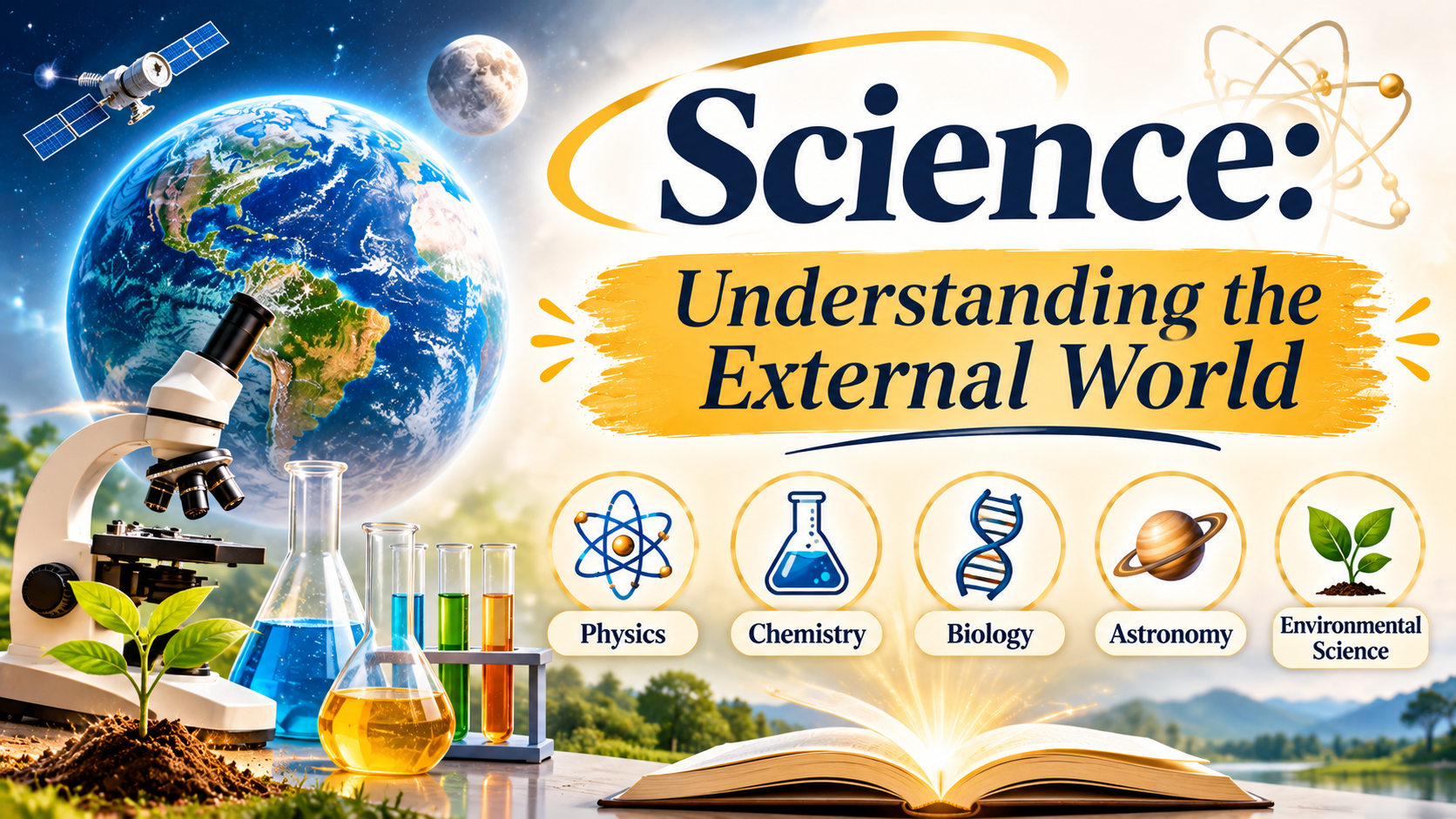
1. Science: Understanding the External World
Science is a systematic way of understanding the universe through observation, experimentation, evidence and critical examination.
It helps us understand:
- How the human brain functions.
- How our bodies respond to stress.
- How the universe developed.
- How medicines work.
- How psychological and biological processes influence behaviour.
For example, meditation has been studied scientifically for its potential effects on stress, attention and emotional regulation.
Research suggests that certain meditation practices can help reduce perceived stress and improve aspects of psychological well-being. Science does not ask us to believe something simply because someone says it is true. It asks us to examine the evidence.
However, science also has limitations. Some questions remain unanswered, and some experiences are difficult to measure with current scientific methods. Not every unanswered question is evidence of something supernatural. It simply means further investigation may be needed.
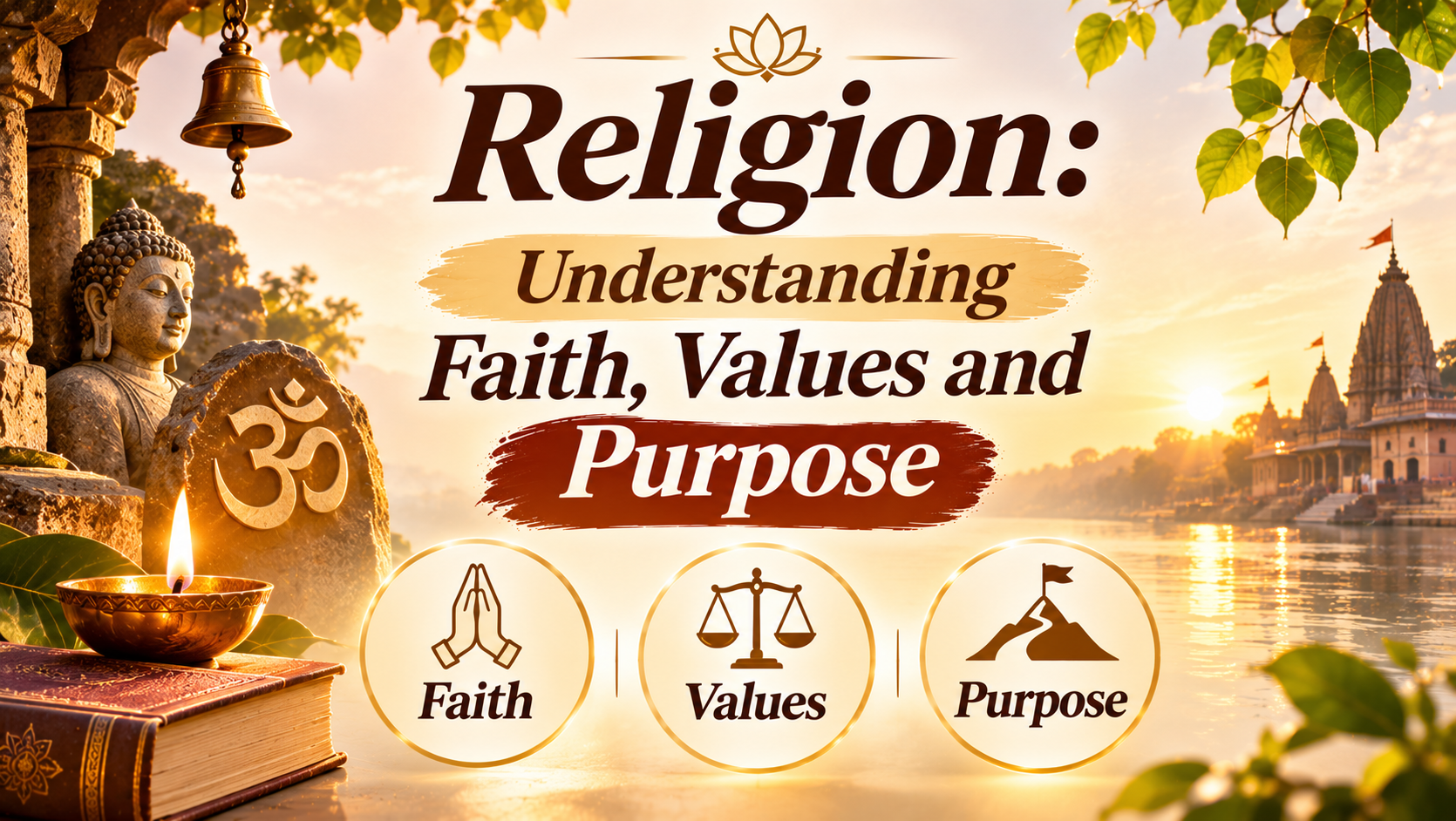
2. Religion: Understanding Faith, Values and Purpose
Religion provides people with a framework for understanding life, morality, God and human responsibility.
Different religions have different scriptures, rituals, philosophies and traditions.
For millions of people, religion offers:
- A sense of belonging.
- Moral and ethical guidance.
- A framework for understanding suffering and purpose.
However, problems can arise when people confuse following religious rituals with developing genuine compassion and awareness.
Visiting a temple, mosque, church or gurudwara is meaningful to many people. But does visiting a place of worship automatically make someone kinder, more forgiving or more conscious?
Not necessarily. Religious practice can be deeply meaningful, but its value also depends on how its teachings are reflected in everyday behaviour.
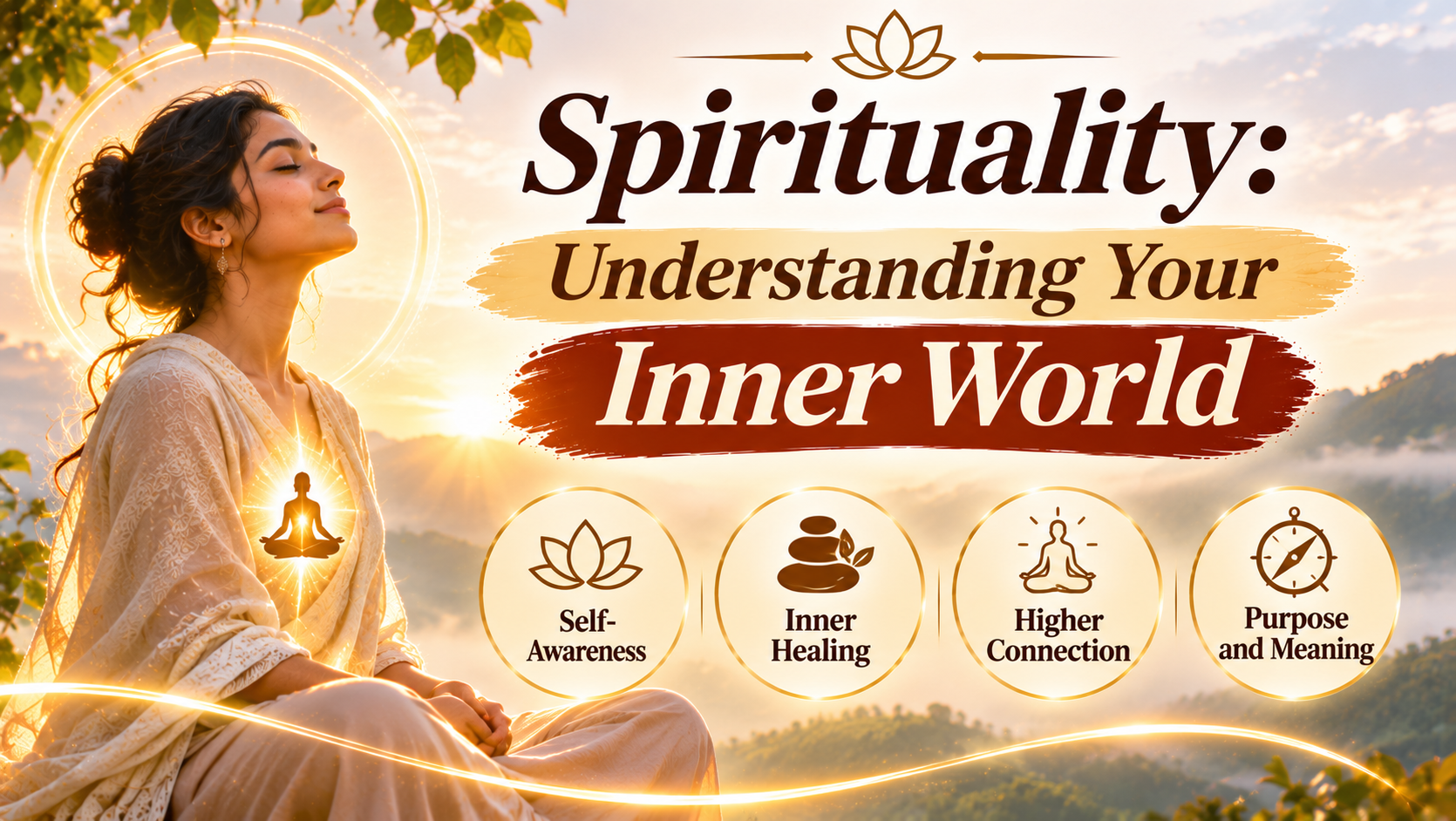
3. Spirituality: Understanding Your Inner World
Spirituality is a broad concept that can involve self-awareness, consciousness, meaning, inner peace and a sense of connection beyond the individual self.
It does not necessarily require belonging to a particular religion. A person may be spiritual while following a religion, or they may explore spirituality independently.
Spiritual practices may include:
- Meditation.
- Mindfulness.
- Gratitude.
- Self-reflection.
- Forgiveness.
- Compassion.
- Prayer and contemplation.
Consider this example.
Two people visit a temple. One person performs a ritual because it is part of their daily routine. Another person uses that experience to reflect on their actions, develop gratitude and become more compassionate.
Both may be religious. But the second person is also consciously exploring an inner transformation. Spirituality is not simply about what you believe. It is also about how you live and how you relate to yourself and others.
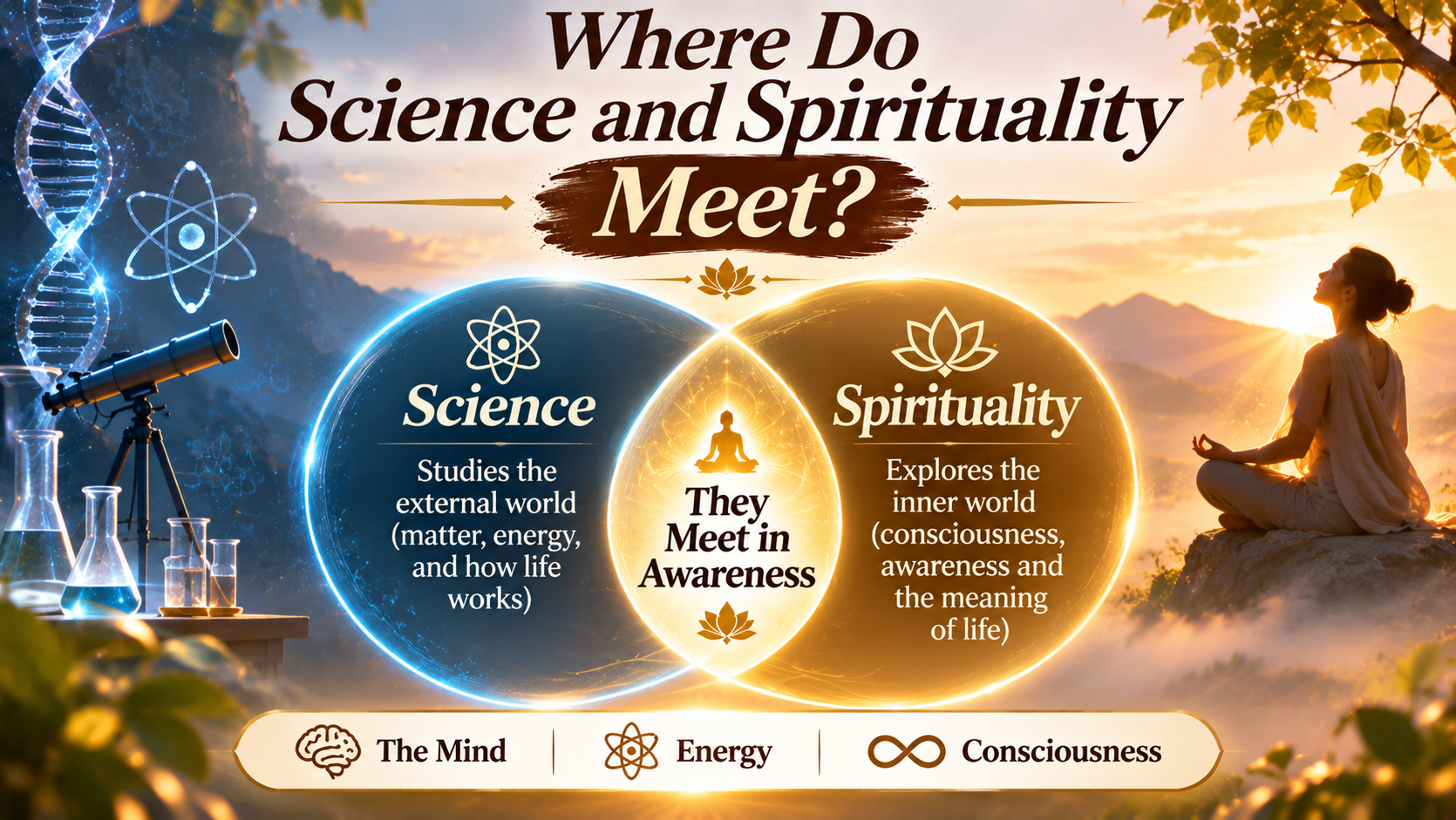
4. Where Do Science and Spirituality Meet?
This is where things become particularly interesting. Modern research has explored several practices traditionally associated with spiritual development.
For example:
- Meditation and the brain: Research using brain imaging and other methods has investigated how meditation relates to attention, emotional processing and brain activity.
- Mindfulness and stress: Psychological research suggests that mindfulness-based interventions can help some people manage stress and emotional difficulties.
- Gratitude and well-being: Studies have found associations between gratitude practices and aspects of psychological well-being.
- Compassion and relationships: Research into compassion and prosocial behaviour explores how caring attitudes can influence social interactions and emotional experiences.
These findings do not prove every spiritual belief. They show that certain practices associated with spirituality can have measurable psychological effects.
We should distinguish between what research demonstrates, what people personally experience and what remains a philosophical or spiritual interpretation.
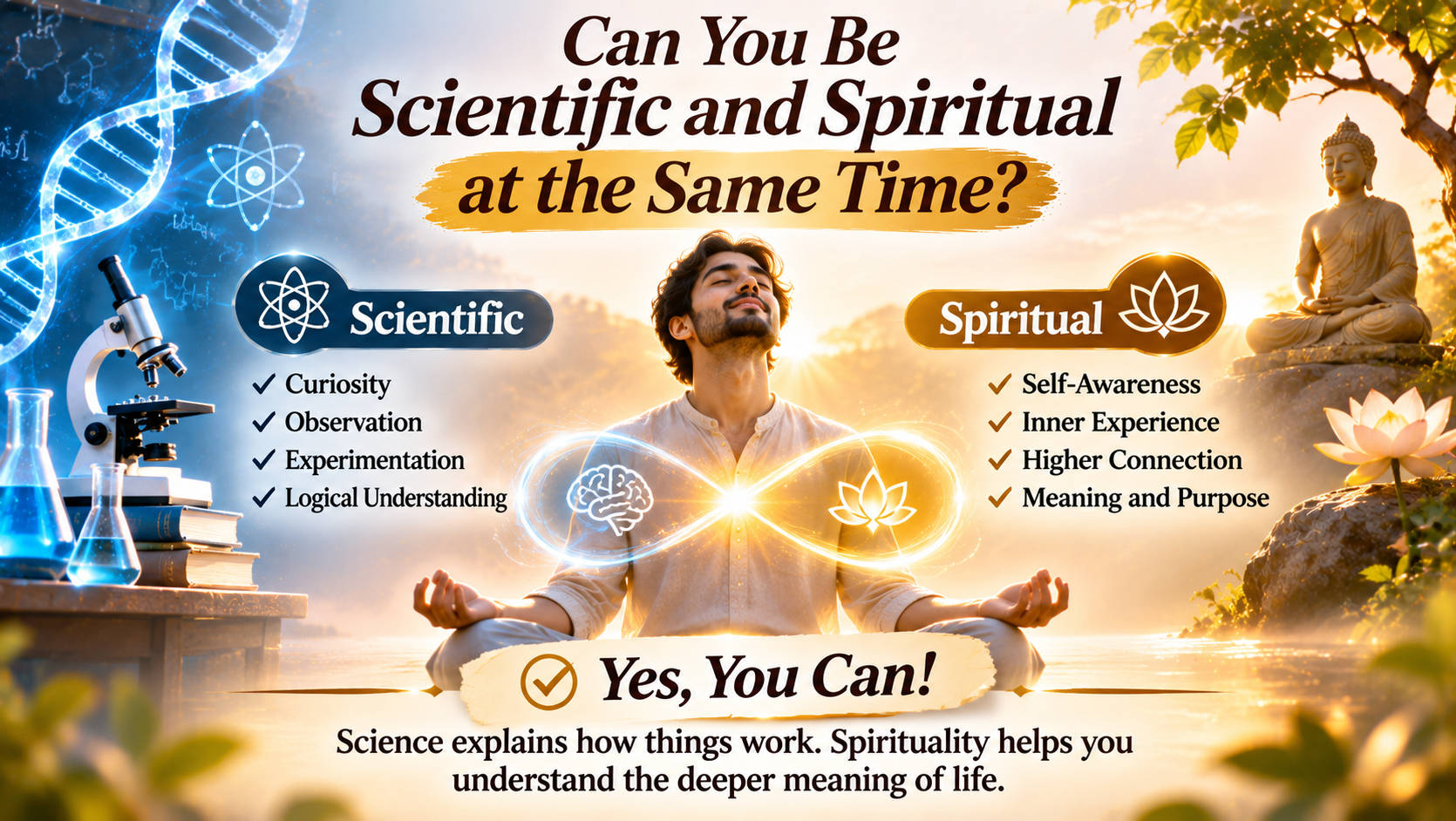
5. Can You Be Scientific and Spiritual at the Same Time?
Absolutely. You can meditate every morning and still believe in scientific investigation. You can follow a religion and appreciate modern psychology. You can believe in God while questioning your own interpretations of religious teachings.
In fact, healthy curiosity can strengthen personal growth. The problem begins when belief becomes unquestionable or when scientific language is used to give unsupported claims an appearance of authority.
For example, the phrase "everything is energy" has meanings in physics, spirituality and everyday language. These meanings should not be treated as interchangeable.
Similarly, concepts such as manifestation, chakras and universal energy may have spiritual significance, but they should not automatically be presented as scientifically established mechanisms. We can respect spiritual experiences without misrepresenting science.
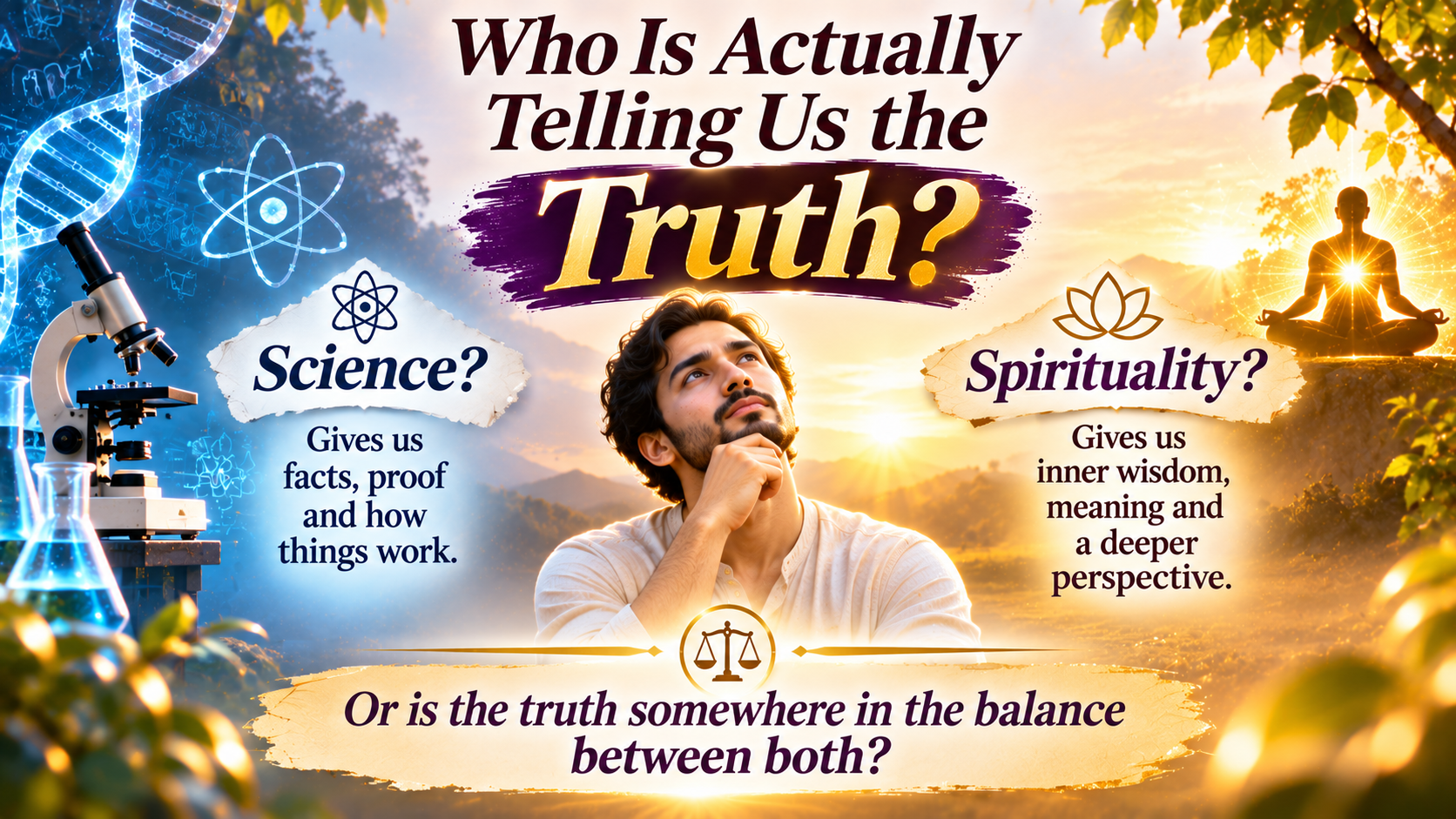
6. So, Who Is Actually Telling Us the Truth?
Perhaps we are asking the wrong question. Science is valuable when we want to investigate how something works. Religion can provide a framework for faith, values and community. Spirituality can help us explore meaning, consciousness and our inner experiences.
They can overlap, but they are not interchangeable. The real challenge is to remain open-minded without becoming blindly accepting. Question your beliefs. Explore different perspectives. Respect other people's experiences. And never stop learning.
Because genuine wisdom does not come from simply collecting beliefs. It comes from developing the ability to examine them.
Begin Your Journey Towards Inner Transformation
You don't have to choose between questioning the world and exploring yourself. You can develop your intellect while nurturing your inner awareness.
At Mind Body & Soul, I guide individuals through meditation, self-awareness, emotional healing, self-love and spiritual development. If you want to understand yourself more deeply, overcome emotional blocks and create a more conscious life, book a one-to-one session.
Book a One-to-One Transformation Session with Me (Magical Mohit) -
Explore your inner world. Heal what needs healing. And create a life that reflects your highest values.
Love & Light,
Magical Mohit
Founder of "Mind Body & Soul" - India's 1st Law of Attraction & Spiritual Online School